

Key Takeaways:
- Recognizing early signs of alternator failure can prevent unexpected breakdowns.
- Symptoms include dimming lights, unusual noises, and electrical malfunctions.
- Regular maintenance and prompt attention to warning signs can extend your vehicle’s lifespan.
Table of Contents:
- Dim or Flickering Lights
- Illuminated Battery Warning Light
- Unusual Noises from the Engine
- Electrical Malfunctions
- Difficulty Starting or Frequent Stalling
- Burning Smell from the Engine
- Dead or Weak Battery
- Final Thoughts
Your vehicle’s alternator is crucial for supplying power to essential systems and maintaining a charged battery. Failing to recognize the early warning signs of alternator problems can leave you stranded, especially during crucial times. Keeping your vehicle in optimal condition helps prevent costly repairs and extends its life, ensuring you stay safe on the road and avoid unnecessary breakdowns. If you’re looking for professional support, consider scheduling a Henderson alternator replacement at the first sign of trouble to protect your vehicle’s health and your peace of mind.
Ignoring subtle changes, such as dimming headlights or unusual dashboard warnings, can result in cascading problems within your vehicle’s electrical system. Early detection and intervention, combined with routine checks, play a crucial role in preventing disruptions. Acting swiftly not only maintains your vehicle’s performance but also safeguards you from being caught off guard by more serious electrical issues down the line.
Along with alternators, other critical components, like battery cables, ensure a seamless flow of electricity throughout your vehicle. Ensuring these parts are in optimal condition helps prevent issues that can further complicate alternator problems.
Because modern vehicles are equipped with sophisticated electrical and safety features, alternators do far more than keep the lights on—they support everything from safety sensors to infotainment systems. When alternators begin to fail, a ripple effect of electrical malfunctions can impact your car’s reliability and performance.
Dim or Flickering Lights
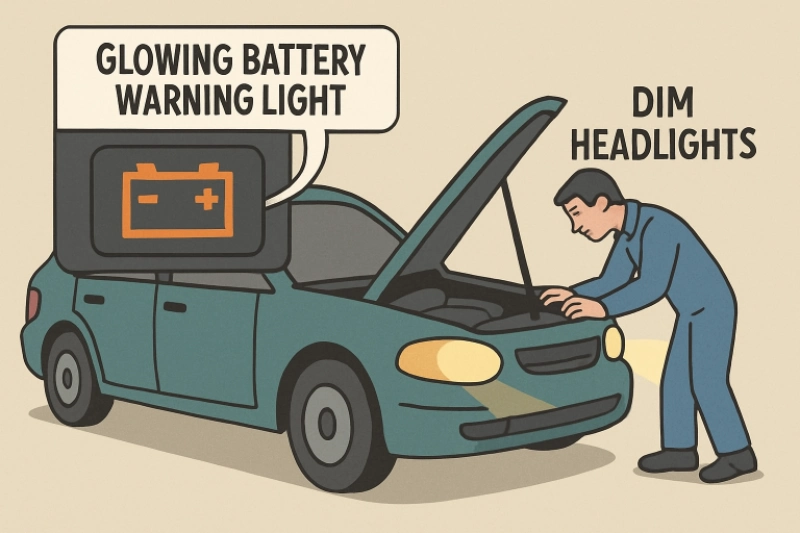
One of the first signs that your alternator may be malfunctioning is noticing that your vehicle’s headlights or interior lights become noticeably dim or flicker. These symptoms often appear at night or during low-light conditions when your car requires consistent electrical output, and the alternator struggles to keep up. A weak alternator can’t deliver sufficient current, causing unpredictable performance in components that rely on dependable voltage. In some cases, faulty or corroded battery cables can worsen these issues by restricting the flow of electricity between the alternator and battery. Left unchecked, this adverse condition can lead to further interruptions and potential nighttime driving hazards.
Illuminated Battery Warning Light
The illuminated battery warning light on your dashboard is designed to alert you to charging system irregularities as soon as they arise. While many assume this signal points strictly to battery issues, it often indicates deeper problems within the alternator itself or its related circuits. The warning light may flicker or remain on steadily, depending on the root cause. Tackling this warning early is vital, as further neglect may lead to a complete loss of electrical power while driving—something no motorist wants to experience unexpectedly.
Unusual Noises from the Engine
If you start to hear odd sounds from beneath the hood—such as grinding, whining, or high-pitched squeals—it might be more than just a minor inconvenience. These noises are commonly produced by worn-out bearings or other degrading components inside the alternator. Over time, these internal parts can fail, often resulting in immediate alternator malfunction or the breakdown of connected systems.
Electrical Malfunctions
Being attentive to declining performance in power windows, seat warmers, infotainment screens, or dashboard instruments can signal a poorly functioning alternator. If these systems respond sluggishly or exhibit erratic, flickering behavior, your vehicle’s alternator may not be able to provide them with the consistent voltage they require. Unaddressed electrical malfunctions can develop into more extensive repair needs, underscoring the importance of routine monitoring.
Difficulty Starting or Frequent Stalling
Another clear indicator of alternator issues is difficulty starting your car, or the engine stalling soon after ignition is engaged. These staging problems occur when the battery is no longer charging correctly. While it’s easy to assume a dying battery is the culprit, underlying alternator problems are often to blame. Frequent stalling or complete failure of the ignition system puts additional strain on the starter and other electrical components, so a quick professional inspection is recommended.
Burning Smell from the Engine
An unusual burning rubber or electrical odor coming from your engine bay is a sign of alternator trouble or overheated wiring. This odor typically signals overheated electrical wires, melting insulation, or even a slipping alternator belt—any of which requires swift attention. Prolonged overheating may cause further component failures, posing a fire risk or rendering your vehicle inoperable until the issue is resolved.
Dead or Weak Battery
While car batteries can naturally degrade over time, a repeatedly dead or weak battery may indicate alternator failure. If you find yourself needing frequent jump-starts, especially with a relatively new battery, the alternator is likely failing to recharge the system. A thorough alternator assessment should be performed anytime you experience this pattern, as ongoing battery drain will ultimately impact all your vehicle’s electrical needs.
Final Thoughts
Taking action at the earliest sign of alternator failure—whether it’s dimming lights, odd noises, or new dashboard warnings—goes a long way in preserving your car’s performance and avoiding costly, unexpected breakdowns. Regular maintenance of both alternators and related electrical systems helps extend your vehicle’s lifespan, providing you with peace of mind on every journey. Stay proactive to ensure your vehicle remains safe, functional, and ready for the road ahead.